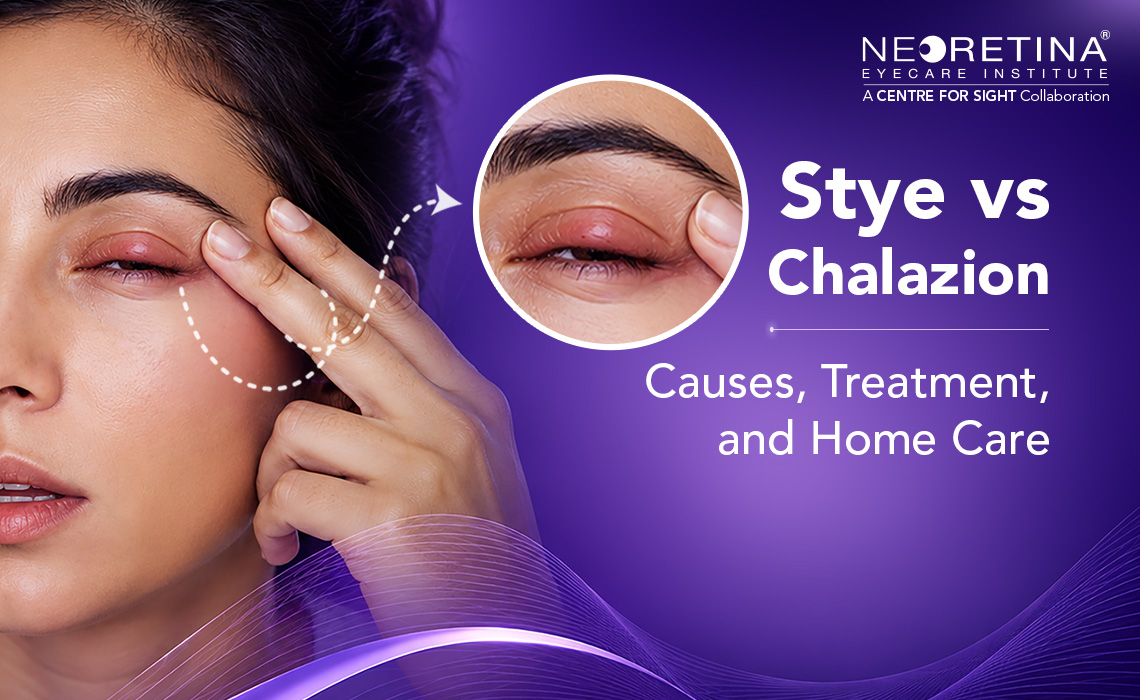
Even though small bumps on the eyelids might not appear to be dangerous, it is always a cause of concern and discomfort especially when the bumps appear out of nowhere. Styes and chalazion are two different types of bumps that one can find on the eyelids. They have slight differences in their appearance but are completely different conditions.
With better knowledge about the differences between stye and chalazion, such as their causes, symptoms, treatments, and home remedies, you will be able to tell whether you should seek professional help or not.
What Is a Stye?
A stye is a sore, typically red bump that forms along the edge of the eyelid. This is mainly formed by an infected eyelash follicle or oil glands, where bacterial infections are common.
A stye in eye appears as a small red bump and may lead to irritation, swelling, pain, tearing, and sensitivity of the affected area. In some cases, a white or yellow spot that contains pus may form.
They normally affect either the lower or upper eyelid. Styes are temporary but touching or squeezing of the area may increase inflammation or even lead to infection.
What Is a Chalazion?
Chalazion is a term for a disease in the eyelid due to blocked oil gland within the eyelid. Chalazion is unlike a stye since it is not formed by bacterial infection.
The lesion usually starts as a hard lump in the eyelid and may be without pain. Chalazion could at first look like a stye especially when there is inflammation.
Large chalazions may exert pressure on the eyeball and impair vision temporarily.
Stye vs Chalazion: Key Differences
It is important to know the difference between these two in order to choose either home treatment or medical examination.
| Feature | Stye | Chalazion |
| Main cause | Usually infection/inflammation | Blocked oil gland |
| Pain | Often painful or tender | Usually painless |
| Appearance | Red, swollen eyelid bump, often near lash line | Firm lump within eyelid |
| Infection | Commonly associated with infection | Usually not an infection |
| Development | Often develops relatively quickly | May develop gradually |
| Home care | Warm compresses and eyelid hygiene | Warm compresses and eyelid hygiene |
| Medical treatment | May require treatment if persistent or complicated | Persistent lesions may require specialist treatment |
This distinction between stye and chalazion is helpful, although only an eye care specialist will be able to diagnose any odd eyelid lump.
Stye Causes
Some of the causes of styes include:
- Eyelash follicle infection with bacteria
- Touching the eyes with dirty hands
- Eyelid infections
- Using infected makeup products
- Going to bed with eye makeup on
- Using outdated eye cosmetics
- Eyelid problems that result in malfunctioning of oil glands
Individuals suffering from recurrent styes will do well to consult an eye specialist about eyelid hygiene and other possible risk factors.
What Causes a Chalazion?
Formation of a chalazion occurs as a result of oil glands getting blocked. Trapped oil is likely to cause inflammation and formation of firm lumps on the eyelid.
The contributing factors can be chronic eyelid inflammation, skin disorders, and blocked eyelid glands in the past. Individuals who experience the development of chalazia repeatedly should seek medical evaluation.
Chalazion Treatment
Small chalazia will often resolve with conservative management techniques. Chalazion management options include:
Warm Compresses
A compress that is warm, but not overly hot (since the eyelid skin is very delicate), placed on the closed eye may aid in breaking up any blocked oils.
Gentle Eyelid Hygiene
Cleaning of the eyelids can assist in minimizing irritation and maintaining healthy eyelids.
Medical Treatment
In case a chalazion does not get better, gets bigger, keeps coming back, or interferes with your sight, your doctor might suggest further treatment. This could be through medicine, injections, or a small procedure that drains or removes the lesion.
Do not attempt to puncture or squeeze a chalazion yourself.
How to Get Rid of a Stye Fast?
There is not any definite way through which a stye can be made to vanish in an instant. But home care treatment can help in this regard.
It is suggested that warm compresses should be used on the closed eye several times during a day. One should not pinch or touch the stye in any way.
If the symptoms get aggravated or start spreading from the eyelid or if they hamper the vision, one should consult a doctor at once.
Stye Home Remedy and Home Care
One of the easiest home remedies for stye is a warm compress. Apply a clean and slightly warm cloth to the closed eyelid for several minutes. Repeat this procedure with a new cloth.
Additional actions may involve:
- Washing your hands prior to applying anything to your eyes or face;
- Refraining from squeezing the lump;
- Refraining from wearing eye make-up until healing is complete;
- Avoiding using other people’s towels and cosmetics;
- Stopping wearing contact lenses in case they irritate your eye(s).
The home treatment is aimed at assisting in recovery and cannot substitute professional treatment in case of serious or prolonged symptoms.
When Does a Stye Need a Doctor?
Most simple styes get better on their own with proper care. In some cases, a visit to the eye doctor is required when the stye:
- Doesn’t heal by itself or gets progressively worse.
- Shows swelling.
- Causes redness around the eye.
- Affects vision.
- Causes much pain.
- Is hard to keep the eye open.
- Repeats over time.
- Remains as a lump after the initial swelling subsides.
In rare instances, medical intervention by a doctor might be recommended.
Another thing that an ophthalmologist can do is check out if a persistent eyelid swelling is actually a stye, chalazion, or something else that affects the eyelids.
Eyelid Lump Treatment and Prevention
Eyelid lump treatment varies based on the underlying cause. You should never attempt to drain or squeeze the lumps yourself since doing this will only worsen the problem.
To avoid recurrence of the stye:
- Ensure you practice proper eyelid hygiene.
- Wash your hands before handling your eyes.
- Replace expired eye makeup.
- Do not share cosmetic products and towels.
- Remove eye makeup before bedtime.
- Never rub your eyes.
- Consult your doctor about recurrent eyelid lumps.
If you often have styes and/or chalazia, you may consult an ophthalmologist for further investigation.
Conclusion
Understanding the distinction between stye and chalazion will allow you to deal with the condition appropriately. Styes usually hurt and have infections involved, whereas chalazion is a blocked oil gland producing a lump that does not hurt.
Warm compresses and proper eyelid care are some of the suggested treatments; however, when it comes to recurring, persistent, hurting, or blurring your vision lumps, a visit to an ophthalmologist would be required. For a specialised eye exam and treatment, one can visit Neoretina.
FAQ’s

- LASIK vs SMILE vs ICL: Which Eye Surgery Is Best for You - September 30, 2026
- Blurred Vision: Causes and When to Worry - September 10, 2026
- Stye vs Chalazion: Causes, Treatment, and Home Care - September 10, 2026