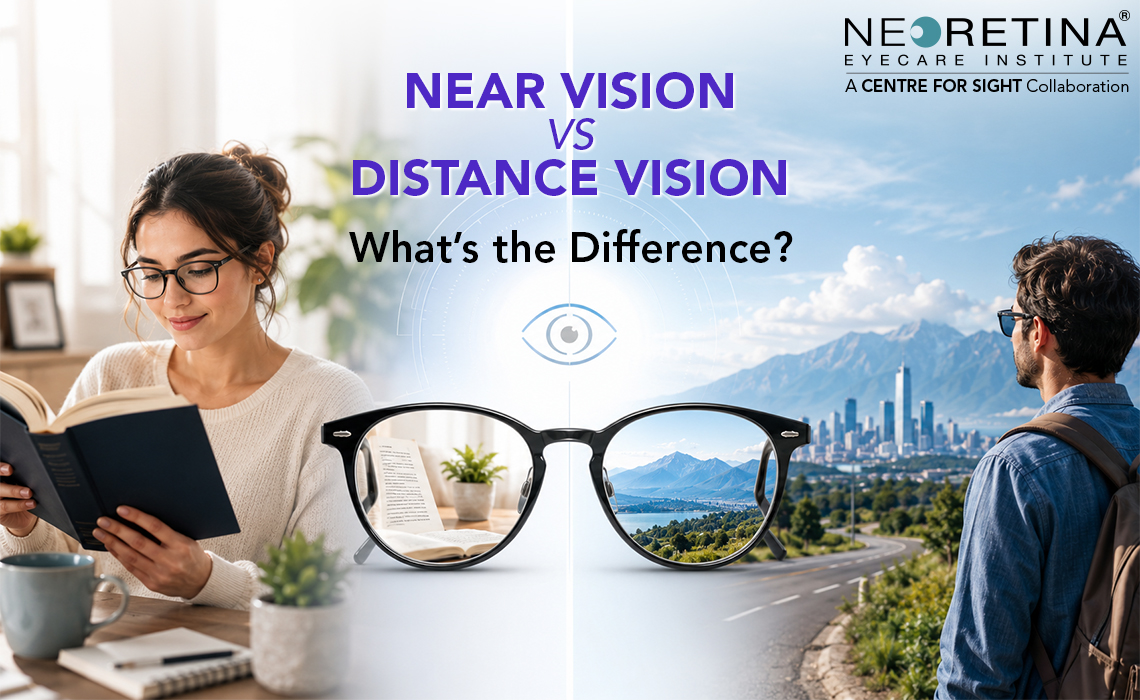
Vision is essential for many things that we do on a daily basis. Vision is used for tasks such as reading, working, driving, learning, and communication. There are several types of problems related to our vision that we may be having. These problems can either be difficulties in seeing objects near us or difficulties in seeing distant objects. We need to understand near vision vs distance vision.
Because of the development of ocular medicine and other technologies, diagnosing and treating vision problems has become simpler than ever, allowing people of all ages to have clear vision.
Understanding Near Vision and Distance Vision
In considering near vision versus distance vision, there is a need to appreciate the eye’s adjustment mechanisms when viewing objects at varying distances.
What Is Near Vision?
Near vision is defined as being able to see clearly the objects which are within the distance of 14 to 18 inches from the eyes. Some examples of activities involving near vision are:
Activities that involve near vision include:
- Reading books
- Using smartphones
- Operating computers
- Sewing or crafting
- Writing and studying
Near vision that is healthy enables the eyes to focus effectively on objects at proximity without any stress.
What Is Distance Vision?
Distance vision is when one sees distant objects clearly. These activities would be examples of distance vision:
- Reading road signs
- Watching television
- Driving a car
- Attending meetings where presentations are made
- Recognising faces from afar
Good distance vision allows people to maneuver within their environment easily and safely.
Understanding the difference between near and distance vision can help people assess whether their vision is deteriorating.
Common Eye Conditions Affecting Near and Distance Vision
Several common vision conditions can affect how clearly a person sees at different distances.
Myopia (Nearsightedness)
Myopia is among the most common reasons for blurred distance vision. Patients suffering from myopia generally have clear sight of near objects, although distant objects may look hazy to them.
Myopia commonly manifests itself through the following symptoms:
- Problematic reading of distant objects
- Squinting
- Eye strain
- Headaches
- Problems seeing at night while driving
Myopia is caused by improper focusing of light inside the eye.
Hyperopia (Farsightedness)
It is the case that hyperopia has more impact on close vision than on distance vision. People suffering from hyperopia usually have a problem with their close vision rather than far vision.
Some common hyperopia symptoms include:
- Having difficulty when reading small texts
- Eye strain
- Getting headaches when you read something
- Blurring of the vision while doing close-up work
- Difficulties with focusing on nearby objects
- Presbyopia
Presbyopia is age-related eye problem that has an impact on close vision. It starts appearing around the age of 40.
Understanding Nearsightedness vs Farsightedness
When comparing nearsightedness vs farsightedness, the most important distinction is how the eye focuses on light.
- Nearsightedness (myopia) mostly impacts long-distance vision.
- Farsightedness (hyperopia) mostly impacts close-up vision.
Both conditions are very common and easily treated through vision correction methods.
Other Distance Eyesight Problems
Several problems that could lead to poor eyesight from a distance include the following:
- Astigmatism
- Cataracts
- Retina problems
- Injuries to the eye
- Age-related vision changes
Regular eye tests can assist in the diagnosis of such problems.
Signs and Symptoms of Vision Problems
Recognising symptoms early can help maintain optimal visual performance.
Symptoms Affecting Near Vision
Common signs include:
- Difficulty reading
- Holding books farther away
- Eye strain during close work
- Frequent headaches
- Blurred near vision
Symptoms Affecting Distance Vision
Individuals who have blurry distance vision might experience:
- Inability to read road signs
- Inability to recognise faces when they are far away
- Problems when driving
- Frequent squinting
- Poor visual acuity when outdoors
General Warning Signs
Either near or distant vision impairment will result in the following symptoms:
- Seeing double
- Eye strain
- Increased light sensitivity
- Difficulties in focusing
- Sharpness change
Getting yourself checked up by a doctor could help find out what is causing the problem and how to solve it.
Diagnosis and Treatment Options for Clear Vision
The methods used today for diagnosing and treating vision-related ailments are extremely efficient.
Comprehensive Eye Examination
The eye doctor normally checks for:
- Visual acuity
- Refraction problems
- Eye conditions
- Retina status
- Focusing capabilities
This can indicate any one of several conditions such as myopia, hyperopia, astigmatism, or presbyopia among others.
Prescription Glasses
Glasses continue to be the most successful treatment for problems related to near and far-sightedness.
The various types of lenses are:
- Single vision lenses
- Bifocal lenses
- Progressive lenses
- Occupational lenses
Contact Lenses
Many people choose to wear contacts because of the convenience involved.
Correcting can be done through the use of:
- Myopia
- Hyperopia
- Astigmatism
- Presbyopia
Advanced Vision Correction Procedures
Innovations in ophthalmology have expanded more opportunities for treatment to those who qualify for long-term vision correction.
There are effective ways to handle most refractive problems using modern methods.
Ongoing Eye Health Monitoring
Regular eye exams are very important for the early detection of any changes and optimal vision results throughout life.
Tips to Maintain Healthy Vision at Every Age
Protecting eye health requires consistent care and healthy habits.
Schedule Regular Eye Exams
Routine examinations help detect vision changes before they significantly impact daily life.
Follow the 20-20-20 Rule
While on your electronic devices:
- Every 20 minutes
- Look away for at least 20 seconds
- At something that is 20 feet away
This easy step will help decrease digital eye strain.
Eat a Vision-Friendly Diet
Some nutrients to protect your vision are the following:
- Vitamin A
- Vitamin C
- Vitamin E
- Zinc
- Omega-3 fatty acids
- UV Eye Protection
Sunglasses protect your eyes from harmful ultraviolet rays.
Manage Screen Time
Exposure to screens needs to be limited to avoid fatigue to eyes.
Stay Physically Active
Physical activity promotes proper circulation and contributes to maintaining good eye health.
Conclusion
Distinguishing near vision from distance vision is crucial because good eyesight means having an understanding of vision variations. In case you have poor distant vision or you are nearsighted, then the right therapy will ensure your vision remains perfect.
With better diagnostic tools, expertise, and treatment approaches, achieving perfect eye health has nowadays become simpler than ever before. This is why eye care institutes like Neoretina help individuals attain perfect eye sight through their vision checks and treatments.
FAQ’s

- LASIK vs SMILE vs ICL: Which Eye Surgery Is Best for You - September 30, 2026
- Blurred Vision: Causes and When to Worry - September 10, 2026
- Stye vs Chalazion: Causes, Treatment, and Home Care - September 10, 2026