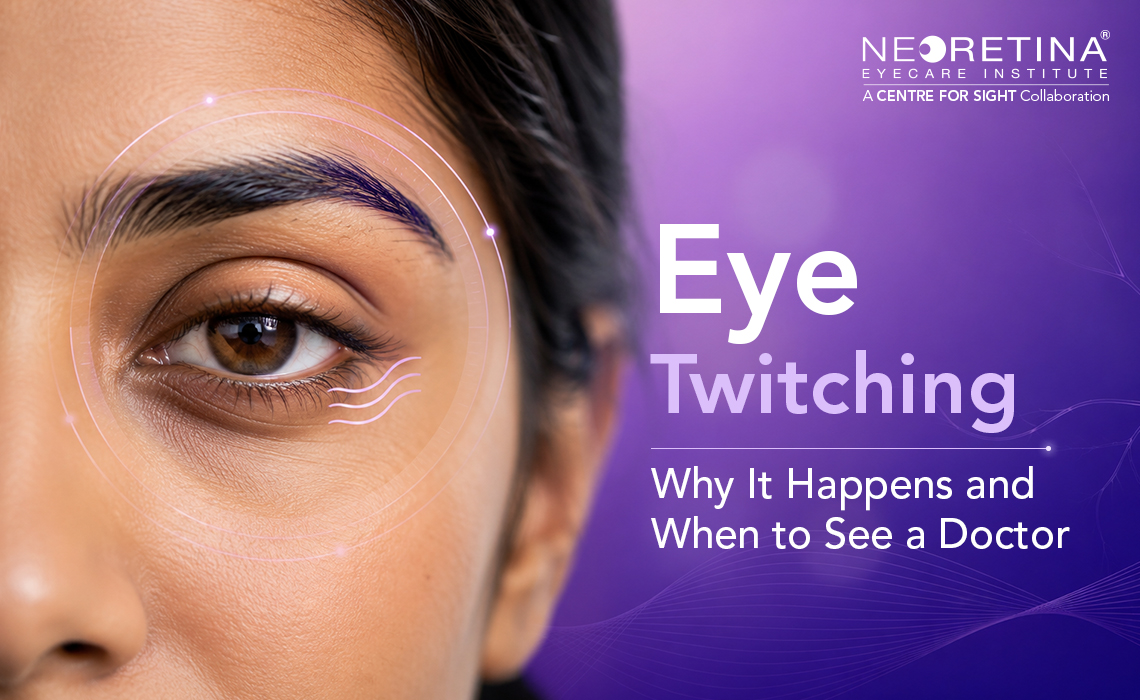
Eye twitching is one of those issues that every person experiences at some point in their life. It can be described as a spasm of the eyelid, which occurs repeatedly in an involuntary manner. Although occasional twitching does not cause any health problems and is quite normal, constant but severe twitching may signal the presence of some medical disorder.
However, some individuals try to find out what eye twitching means and what significance is associated with experiencing twitching of the left eye and right eye. Most often, twitching of the eye happens because of stress and factors such as tiredness, overconsumption of caffeine, and strained eyesight.
The comprehensive blog highlights the causes of eye twitching, the methods of relieving eye twitching, when to visit a doctor, and treatment of eye twitching.
What Is Eye Twitching?
The term “eye twitching” is used to describe an involuntary muscle contraction in the eyelid. It is scientifically called eyelid myokymia. The twitching can occur in the upper or lower eyelid and can last from a few seconds to several minutes. In some cases, it may come back all day until it resolves on its own.
Twitching of the eyes can happen on one side or both sides and includes the following:
- Twitching of upper eyelid
- Twitching of lower eyelid
- Spasms of eyelids
- Repeated blinking of eyes
- Muscle contractions
Despite being irritating, such cases are normally harmless to the eyes.
Why Does My Eye Keep Twitching?
The most frequently asked question in relation to any health-related topic is “Why does my eye keep twitching?”
There are various reasons why your eye may twitch. Your eyelids are extremely sensitive, and even a slight change in your lifestyle may result in eye twitching.
The most common causes include:
- Stress and anxiety
- Lack of sleep
- Excessive screen time
- Eye strain
- Dry eyes
- Overconsumption of caffeine
- Drinking alcohol
- Smoking
- Nutrient deficiency
- Allergies
Determining and treating the root cause can help to alleviate the twitching problem.
Common Eye Twitching Causes
Firstly, one must understand eye twitching causes for efficient management.
| Cause | How It Contributes |
| Stress | Increases muscle tension and nerve activity |
| Sleep deprivation | Fatigues the muscles around the eyes |
| Excessive caffeine | Stimulates nerves and muscles |
| Digital eye strain | Overworks the eye muscles |
| Dry eyes | Irritates the eyelids |
| Eye allergies | Causes rubbing and irritation |
| Nutritional imbalance | May affect normal muscle function |
| Certain medications | Rarely contribute to twitching |
Most causes are temporary and can be improved through lifestyle changes.
Left Eye Twitching vs Right Eye Twitching
Left eye twitching and right eye twitching have been considered to be indicative of something special, according to popular culture and superstition. But from the medical point of view, there is not much distinction made between left or right eye twitching.
The reasons for either case are mostly similar, such as:
- Fatigue
- Stress
- Coffee
- Strain in the eye
- Dry eyes
It does not matter whether it is the left eye or right that is twitching; what matters most is the period and the presence of any accompanying symptoms.
The
Under Eye Twitching: Is It Different?
Twitching of the lower eyelid is called under-eye twitching, which can also be classified under eyelid myokymia. The twitch may even be more apparent since the lower eyelid has sensitive muscles.
Causes may be
- Prolonged use of computers
- Lack of sleep
- Emotional stress
- Fatigue in the eyes
- Dry eye syndrome
Most often, under-eye twitching will improve on its own without requiring any medical treatment.
Is Eye Twitching a Sign of Something Serious?
Is eye twitching a symptom of some kind of serious problem?
This depends on the duration, severity, and accompanying symptoms.
Typically Unrelated to Serious Conditions
- Short-lasting: for seconds or minutes
- Occasional
- No pain
- Normal eyesight
- Improved by resting
May Require Medical Attention
- Twitching occurs for several weeks
- Facial twitching starts
- Eye is closed fully while experiencing twitches
- Inflammation or swelling appears
- Double vision
- Prolapse of eyelid
- Changes in eyesight
Twitching can sometimes occur in association with some eye or neurological disorders and requires medical attention from an ophthalmologist.
Comparison: Harmless vs Concerning Eye Twitching
| Harmless Eye Twitching | Needs Medical Attention |
| Short-lasting | Persists for weeks |
| Mild spasms | Severe muscle contractions |
| No vision problems | Blurred or double vision |
| Improves with rest | Worsens over time |
| No facial involvement | Facial muscle twitching |
Knowing these warning signs helps patients seek timely medical advice.
What Is the Way to Prevent Eye Twitching?
If you’re asking yourself “How to stop eye twitching?” changing your habits is usually what helps.
Consider these:
Sleep Well
It is recommended to have between 7 and 9 hours of sleep per day.
Reduce Stress
Stress is among the major causes of eyelid twitching. Engaging in practices like meditation, yoga, or deep breathing can be helpful.
Limit Caffeine
Reduce your consumption of coffee, tea, energy beverages, and other beverages with caffeine content if you are having twitches after consuming them.
Rest Your Eyes
Follow the 20-20-20 rule while using the screen, which means that after every 20 minutes, you should look at something 20 feet away from your eyes for 20 seconds.
Treat Dry Eyes
If the twitching is caused by dry eyes, artificial tears may be beneficial for relieving the irritation.
Eat a Balanced Diet
Good nutrition promotes healthy functioning of muscles and nerves.
When Should You See a Doctor?
Even if the condition clears up on its own, you should see an eye doctor if:
- Twitching lasts longer than one to two weeks
- The eyelid is completely closed when spasms occur
- The twitch moves into other facial muscles
- You have vision problems
- Your eye looks red, puffy, or painful
- There is eyelid drooping
- Twitching occurs more frequently
Early consultation can help detect rare but significant causes of the problem.
Why Early Evaluation Matters
Symptoms of a 42-year-old office employee included episodes of twitching of eyelids that lasted for weeks. Initially, the problem was diagnosed as being due to excessive workload and stress. However, even after reducing coffee intake, the twitching continued.
The diagnosis showed that the reason for the dryness of the eyes was excessive use of computers. After the administration of the treatment regimen, consisting of lubricating eye drops and changing ergonomics in the workplace, the twitching disappeared.
This is just one of the examples of why it is necessary to consult a doctor in such cases.
Expert Tips to Prevent Eye Twitching
The following tips are suggested by eye specialists:
- Get enough sleep at night.
- Have effective stress management.
- Take frequent breaks from screens.
- Stay hydrated.
- Wear proper glasses if necessary.
- Get eye exams regularly.
- Avoid excess caffeine consumption.
- Don’t rub your eyes too much.
Good eye care routines can help avoid eye twitches.
Conclusion
Eye twitching generally is not a serious problem and occurs because of stress, fatigue, eye strain, or too much coffee. Yet, eye twitching coupled with problems with vision, other facial muscle spasms, and even weak eye muscles is an alarming sign that needs to be taken seriously.
Knowing the cause of the eye twitching, changing your lifestyle appropriately, and seeking medical advice will guarantee your eye health. In case of any difficulties, turn to our experts at Neoretina and get a proper checkup of your eyes.
FAQ’s

- LASIK vs SMILE vs ICL: Which Eye Surgery Is Best for You - September 30, 2026
- Blurred Vision: Causes and When to Worry - September 10, 2026
- Stye vs Chalazion: Causes, Treatment, and Home Care - September 10, 2026