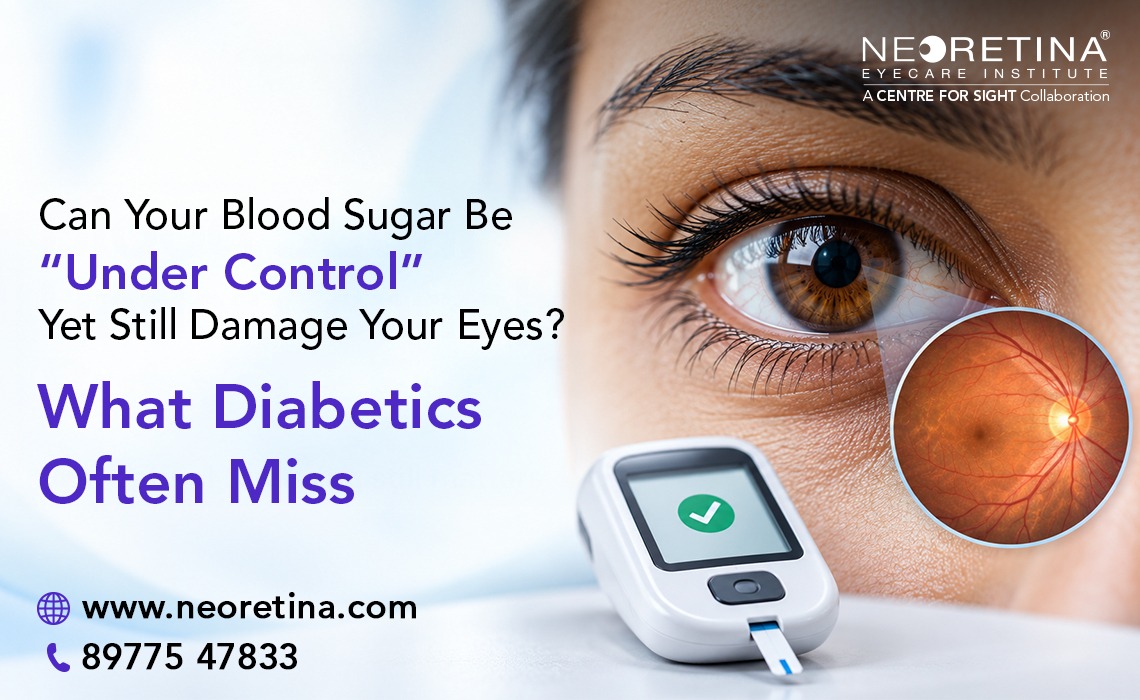
Many people with diabetes think maintaining normal blood sugar levels is enough to keep their sight intact. Maintaining good glucose levels indeed lowers the probability of developing complications; however, it doesn’t rule out the risk of eye problems entirely.
There is a much broader relationship between diabetes and eye health than just a blood sugar level test. Exposure to high glucose levels, blood pressure, cholesterol, and changes in the retina can affect your vision despite the latest tests looking fine.
It’s important to learn the warning symptoms and have eye check-ups regularly.
Understanding Diabetes and Eye Health
Diabetes has the potential to affect small blood vessels that supply the retina. The blood vessels in the retina may become damaged, causing leakage, bleeding, or blockage.
One of the more common types of diabetes eye problems is diabetic retinopathy. Early stages of this condition often do not come with any symptoms. Patients will begin experiencing visual problems as the condition advances.
Some other conditions caused by diabetes include diabetic macular edema, cataracts, and glaucoma. It is important to be aware of these conditions since there is a close relationship between diabetes and vision loss due to eye disease.
6 Ways Diabetes Impacts Vision
-
Diabetic Retinopathy
Diabetic retinopathy symptoms occur due to the effect of diabetes on the blood vessels that supply the retina. In the early stages, this condition might have no visual impact, and thus the need for regular screening.
When the disease advances, there could be danger to vision in the form of abnormal blood vessels and hemorrhage.
-
Diabetic Macular Edema
The condition is referred to as diabetic macular edema where excess fluid gathers in the macula, which is located at the back of the eye and provides clear central vision.
The symptoms that occur include blurry or wavy central vision.
-
Cataracts
Individuals who suffer from diabetes are likely to develop cataracts, even at a young age.
Cataracts are responsible for cloudiness of the eye lens, leading to blurry vision, glare, and poor visibility in dim lighting.
-
Glaucoma
There is a connection between diabetes and some types of glaucoma. The disease may cause optic nerve damage, which leads to peripheral vision loss without any warning symptoms.
-
Temporary Blurred Vision
The changes in blood sugar level have a temporary effect on the focus of the lens of the eye.
If such a situation arises, these symptoms could improve once the glucose levels get back to normal; however, it is necessary to conduct an eye test for retinal problems.
-
Retinal Bleeding and Severe Vision Loss
Severe diabetic retinopathy can lead to bleeding into the vitreous, which is the fluid contained in the eye.
This will result in floaters, dark shadows, or vision loss. Immediate ophthalmological examination is necessary in such cases.
Why Eye Damage Happens Despite Good Control?
One of the worries that patients share is having their blood sugar under control but vision problems. There can be many reasons for this.
Past years of high glucose levels: There is a possibility of damage to the retina before the diagnosis of diabetes and improvement in glucose levels.
Duration of the disease: As a diabetic patient lives longer, the chances of damage to the retina increase.
High blood pressure and cholesterol: High blood pressure and cholesterol levels increase the risk of retinal damage.
Retinal disease: Improvement in glucose levels does not mean improvement in retinal damage.
Rapid glucose improvement: However, in some individuals who already have retinopathy, an abrupt decrease in blood sugar levels may lead to temporary deterioration of the retinal condition, thus necessitating proper monitoring.
Glucose control still holds benefits. Nevertheless, retinal screening needs to be done even if the HbA1c tests are within the recommended levels.
What Diabetics Often Miss?
A major misunderstanding about diabetic eye disease is that there will be symptoms before any harm is done.
In fact, the early symptoms of diabetic retinopathy can be nonexistent. One can read easily, drive well, and not have any visual problems even when the retina is being damaged.
The difference between a vision test and a retinal exam is often not known.
Just because one has their spectacles checked does not mean that their diabetic retina is being checked.
Blood Sugar Monitoring vs Eye Screening
| Factor | Blood Sugar Monitoring | Diabetic Eye Examination |
| Main purpose | Measures glucose control | Assesses eye and retinal health |
| Detects retinal damage | No | Yes |
| Identifies early retinopathy | No | Yes |
| Helps assess future risk | Yes | Yes |
| Recommended approach | As advised for diabetes management | Based on diabetes type, retinal findings, and specialist advice |
Both are essential for treating the disease, but neither can be substituted for the other.
Who Is at Risk of Diabetic Retinopathy?
Diabetic retinopathy can affect anyone suffering from type 1 or type 2 diabetes.
The risk of developing diabetic retinopathy is usually higher for patients who have been suffering from diabetes for a long time, who have high blood sugar, high blood pressure, high cholesterol, kidney problems, and retinal changes.
Another condition that may elevate the risk of developing diabetic retinopathy is pregnancy in a woman who has diabetes.
Individuals with controlled blood sugar need to undergo regular examinations due to past sugar exposure.
Why Regular Diabetic Eye Exams Matter?
A comprehensive eye examination in a diabetic patient aids in detecting retinal problems before they affect vision.
Some of the diagnostic tests that can be performed during the eye examination of a diabetic patient include dilated retinal examination, retinal photography, and optical coherence tomography (OCT), depending on clinical indication.
Based on the recommendations by the American Diabetes Association as of 2026, it is recommended that adult patients with type 2 diabetes should have a comprehensive eye examination soon after diagnosis. Meanwhile, adult patients with type 1 diabetes are recommended to have their first eye examination five years after diagnosis.
The follow-up schedule is once a year; however, there are some cases in which patients have been advised to come back for eye examinations annually or biennially, depending on the results and management of the condition.
Conclusion
Good blood glucose levels are vital, but they should not be the only criterion for good eyesight in diabetics. Retinal damage may occur gradually and without giving any symptoms despite having normal blood glucose levels.
Retinal screening, blood pressure control, cholesterol regulation, and prompt medical assistance may help reduce the chances of avoidable vision loss.
There is Neoretina Eyecare Institute in Hyderabad providing specialised retinal examination, diagnostic procedures, and treatment of different retinal diseases including diabetic retinopathy. Focusing on early detection and correct treatment, Neoretina helps patients understand their retinal status.
In the case of diabetics, retinal examinations by appointment become an absolute necessity for eye care.
FAQ’s

- Can Your Blood Sugar Be “Under Control” Yet Still Damage Your Eyes? What Diabetics Often Miss - October 27, 2026
- LASIK vs SMILE vs ICL: Which Eye Surgery Is Best for You - September 30, 2026