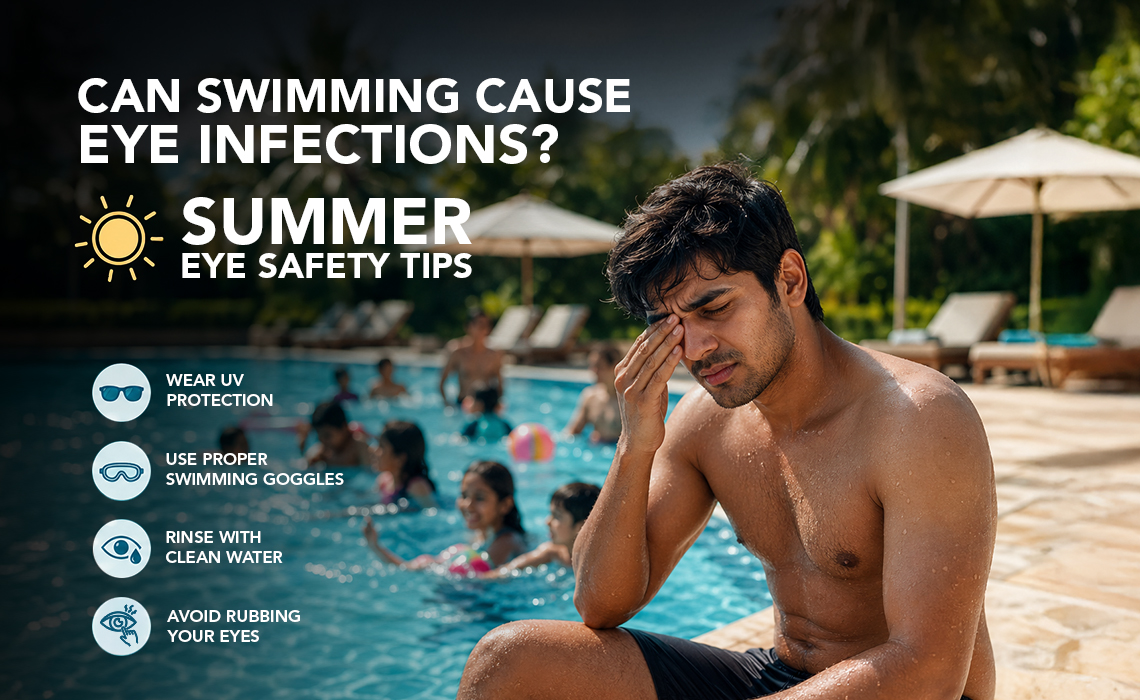
There are many things one can do during the summer and swimming surely is a best bet, feeling quite refreshing and full of fun. No matter how, whether it be in a pool, lake or ocean everyone loves water at any age. But what many do not, or so rarely know about is that there are times when swimming causes eye infections if not taken care of. When it comes to irritants in water or other chemicals, the eyes can also be involved and corneal ulcers can develop. With these warnings regarding swimming hazards, and provided you have summer care instructions, everyone can look forward to a fun family swim – without sacrificing eye well-being!
Can Swimming Really Cause Eye Infections?
Yes, swimming can be linked with higher chances of Eye Infections if the water hygiene is not maintained water is or no precautionary steps are taken.
Common causes include:
- Chlorination and chemicals in pools
- Pathogenic bacteria and viruses from polluted water
- Incorrect Use of Contacts When Swimming
- Poor hygiene practices
Well, this means even clean water can contain germs which lead to swimming pool eye infection hence you should protect your eyes where possible.
Why Do Eyes Get Irritated After Swimming?
Swimming can also cause discomfort for the eyes. After swimming many people may raise some irritation which can sometimes alarm them.
Reasons for irritation:
- Chlorine stripping natural tear film
- Saltwater causing dryness
- Bacteria or allergens in water
- Prolonged exposure without eye protection
This can cause irritation, redness, burning and sensitivity to light.
Common Eye Infections Linked to Swimming
-
Conjunctivitis (Pink Eye)
It is one of the most well-known infections for both viral or bacterial conjunctivitis.
Viral vs Bacterial Conjunctivitis:
Viral conjunctivitis: Contagious; observably clear watery discharge and redness
Bacterial conjunctivitis: thick discharge from eyes, often antibiotics needed in future.
Both patterns can develop following exposure to impure water.
-
Corneal Ulcers (Serious Condition)
Corneal ulcer can be one of the severest complications as far as infection is concerned that may arise from swimming. This is one of the cornea defects; there is an open sore on the surface and usually gets infected by bacteria, fungus or parasite.
Risk factors include:
- Swimming with contact lenses
- Exposure to unclean water
- Delayed treatment of eye irritation
Symptoms of corneal ulcers:
- Severe eye pain
- Redness and swelling
- Blurred vision
- Sensitivity to light
- Discharge from the eye
Without treatment, this could damage their vision permanently. Corneal ulcer management is crucial immediately in order to avoid complications.
Symptoms of Eye Infections After Swimming
Recognizing early symptoms of Eye Infections can help you seek timely treatment.
Common signs include:
- Redness in the eyes
- Burning or itching sensation
- Excessive tearing
- Discharge (watery or thick)
- Blurred vision
- Sensitivity to light
If these symptoms continue, immediate consultation of an eye specialist near me for proper diagnosis and treatment are highly recommended.
Summer Eye Safety Tips
Swimming naturally puts your eyes at risk, but taking the right steps to protect them is easy.
Essential summer eye care tips:
- Use swimming goggles to not let water fall directly
- Do not swim in pools that are badly managed.
- Do not open your eyes underwater in dirty water.
- Remove contact lenses before swimming
- Rinse any exposure with clean water after swimming
- Do NOT touch/rub your eyes
Taking such steps can help mitigate the risks of swimming pool eye infection and other complications.
What to Do If You Experience Eye Irritation?
If you notice eye irritation after swimming, don’t ignore it.
Immediate steps to take:
Flush your eyes out with purified or saline water
Avoid rubbing your eyes
If needed, you can use lubricating eye drops
Give your eyes a rest that doesn’t include the screen
Seek care right away if symptoms get worse, or do not start to get better after a day or two.
When to See a Doctor
Many minor irritations may get better by themselves, but some require professional help.
Visit Your Eye Specialist If You Have:
- Persistent redness or pain
- Vision changes
- Sensitivity to light
- Thick discharge
- Symptoms persisting for greater than 2–3 days
- Timely intervention can avert refractory corneal ulcers and persistent damage.
Why Prevention is Better Than Cure?
Eye infections can have a mild discomfort to vision-threatening disease spectrum. Prevention is better than the cure, always!
But, if you follow basic hygiene protocols and wear appropriate swimming glasses, you can be with your swimming regime without compromising the health of your eyes.
Conclusion
Swimming is a fun and healthy form of exercise however, it can offer health risks for your eyes. However, if eye infections are left untreated then they can be as severe as corneal ulcers.
With the basic summer eye care tips followed, timely seeking medical help (if necessary), you can be able to save your vision easily!
Specialized eye care centers such as Neoretina that believe in preventive care and early treatment of eye disorders are highly recommended for effective diagnosis and high-end treatment of the condition. You can enjoy a productive summer in an unspoiled environment, safeguarding the fact at the same time, if you follow all the precautions during this season.
FAQ’s

- LASIK vs SMILE vs ICL: Which Eye Surgery Is Best for You - September 30, 2026
- Blurred Vision: Causes and When to Worry - September 10, 2026
- Stye vs Chalazion: Causes, Treatment, and Home Care - September 10, 2026