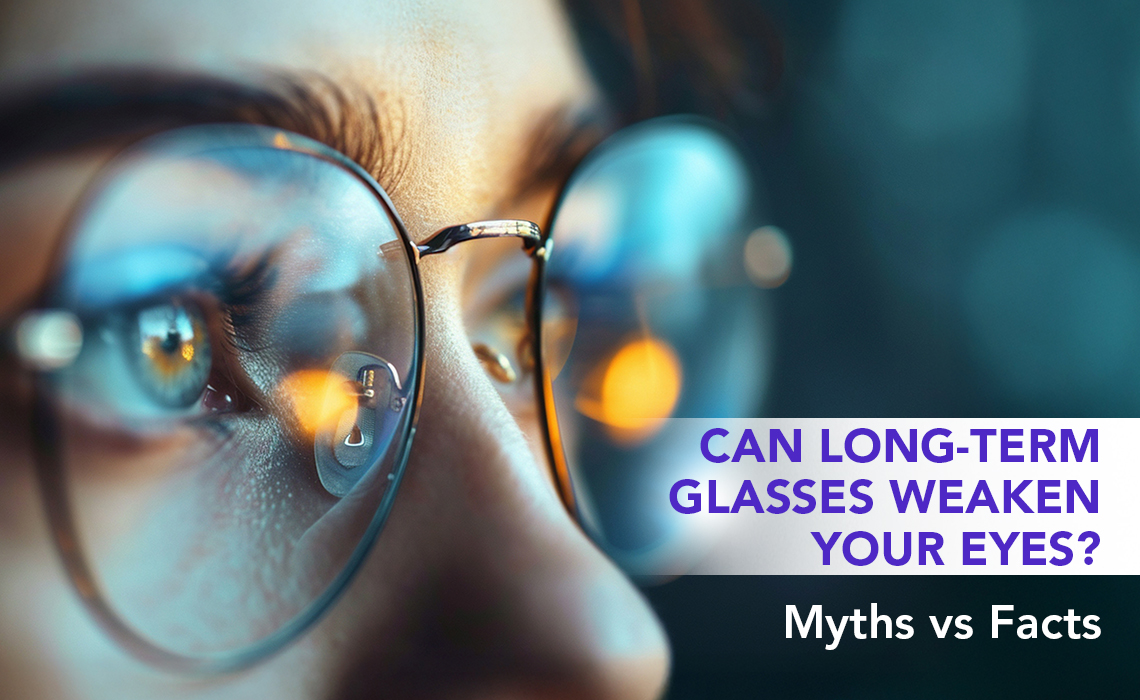
If you have recently started wearing spectacles (or your prescription keeps changing), it is natural to wonder whether the long-term use of glasses can make your eyes “lazy” or worsen eye power. This concern is one of the most common vision myths and facts topics eye doctors hear, especially from students, working professionals, and parents of children prescribed specs.
The reality is simpler and far more reassuring: properly prescribed glasses are external optical aids that help focus light correctly onto the retina; they do not weaken the eye, and they do not permanently “fix” refractive errors either. What people usually interpret as “my eyes became weaker because of glasses” is often the normal progression of myopia during growth years, natural age-related changes, or discomfort from an outdated/wrong prescription.
Myth 1: Glasses increase eye power
Myth: Wearing spectacles regularly will make the eye power increase faster.
Fact: Wearing glasses does not make refractive errors progress; it corrects the vision you already have. Eyeglasses used for common refractive errors (myopia, hyperopia, astigmatism, presbyopia) do not weaken your eyes.
So why do prescriptions change? Here are common eye power increase reasons that are unrelated to glasses “damaging” your eyes:
- Natural growth-related myopia progression (often during childhood/teenage years).
- Age-related focusing change (presbyopia) commonly starts in the 40s.
- Visual demands and habits (lots of near work, prolonged screen time), which can contribute to discomfort and may be associated with worsening symptoms that prompt a check-up.
A useful way to frame it: glasses do not cause the change; they reveal it, because once you are used to clear vision, blur without glasses feels more obvious.
Myth 2: Not wearing glasses strengthens eyes
Myth: If you avoid specs, your eye muscles will “work harder” and become stronger, reducing your number.
Fact: This belief does not hold up scientifically; glasses do not work like a “crutch” for eye muscles. Forcing the eyes to focus without needed correction can lead to eye strain and fatigue in adults, and in children, it may worsen refractive errors, particularly myopia, because clear, comfortable focusing matters during development.
If someone is squinting often, getting headaches, or struggling to see the board/road clearly, skipping glasses typically increases strain rather than improving eyesight.
Wearing glasses daily: what you may feel
Many people notice discomfort in the first few days of a new prescription and assume something is wrong. In reality, your visual system can take a short time to adapt to new lenses, especially after a large prescription change, a new astigmatism correction, or first-time progressive lenses.
Common wearing glasses daily effects that are usually temporary (or solvable) include:
- Mild headache or dizziness during adaptation.
- A “fishbowl” effect with some lens types until you adjust.
- Pressure behind ears/nose from poor fit (a frame issue, not an eye issue).
If symptoms persist beyond a reasonable adaptation period, it is worth checking lens power, lens centring, and fit, because an inaccurate or outdated prescription can cause ongoing discomfort.
Eye strain and glasses: what is the connection?
Eye strain and glasses often get discussed as if glasses cause strain, but the more common situation is the opposite: uncorrected or under-corrected vision can force extra effort and trigger fatigue. Digital habits also play a role, such as computer vision syndrome (digital eye strain), which is a recognised cluster of symptoms linked to prolonged screen use, and discomfort tends to increase with more screen time.
Glasses can help reduce strain when they match your needs (for distance, near, or computer work), but strain can still happen if:
- Your prescription is outdated.
- Your lenses are not optimised for screens/near work.
- You work long hours without visual breaks (even with perfect glasses).
Practical comfort tips that do not rely on myths:
- Take regular breaks during screen use.
- Blink often.
- Consider a dedicated computer prescription if recommended in an eye exam.
Glasses vs contact lenses: which is better long-term?
When comparing glasses vs contact lenses, it helps to focus on lifestyle, comfort, and safe use rather than assuming one “protects” eyesight more. Both glasses and contact lenses correct refractive errors by changing how light focuses. Neither option inherently stops the progression of myopia/hyperopia/astigmatism.
Key differences to consider:
- Glasses are external and generally simpler for daily maintenance.
- Contacts offer a wider field of view and convenience for sports, but require strict hygiene and proper wear schedules to reduce infection risk (an eye-care professional should guide this).
- If vision seems worse or eyes feel irritated, the issue may be fit/prescription, dryness, or over-wear, rather than the concept of contacts themselves.
If choosing between them, the “best” option is the one you can use comfortably and safely with regular check-ups.
Can glasses damage eyes?
This question usually comes from two situations:
- wearing the wrong prescription, or
- feeling “dependent.”
Properly prescribed glasses do not weaken eyes for common refractive errors, but wearing an incorrect prescription can cause symptoms like headaches, fatigue, and blurred vision, which should be corrected with an updated exam.
So, can glasses damage eyes? In most routine cases, no glasses are optical aids, not something that harms eye tissues by normal use. However, if someone experiences sudden changes in vision (like distortion, flashes, a curtain-like shadow, or rapid worsening), that is a medical red flag that needs prompt evaluation because underlying eye disease(not glasses) may be responsible.
Causes of worsening eyesight
If vision is changing over months or years, it is usually due to the natural course of a refractive condition or age-related changes. People often connect glasses with worsening simply because vision can deteriorate with age, and prescriptions are updated to keep clarity.
Common causes of worsening eyesight include:
- Myopia progression during growth years.
- Presbyopia as the lens loses focusing flexibility with age.
- Undetected eye conditions (for example, cataracts can cause blur, glare, halos), which require clinical diagnosis.
Regular eye exams matter because they do not just update your number; they also help detect health issues early.
Conclusion: Clear Vision Without the Fear
If any kind of clarity and confidence are needed about your prescription, lens options (including computer-use needs), or any kind of ongoing discomfort, Neoretina Eyecare Institute, Hyderabad, can help with a comprehensive eye evaluation and can assist you in separating myths from what is truly necessary for your eyes. With its NABH-accredited setup and state-of-the-art diagnostic facilities, Neoretina supports patients with thorough eye assessments and personalised guidance for long-term visual comfort.
FAQ’s
No, long-term use of glasses does not weaken eyes; they simply correct existing refractive error.
Eye power generally tends to change due to natural myopia progression or age-related presbyopia, not due to glasses.
Yes, short-term headaches or mild distortion can happen while you are adapting, but persistent issues can often mean an outdated/wrong prescription or just a poor fit.
If prescribed, wearing the right glasses often reduces strain, but screen breaks still matter because digital eye strain can occur even after correction.

- Eye Floaters and Flashes: Causes, When to Worry, and Treatment - July 27, 2026
- Eye Twitching: Why It Happens and When to See a Doctor - July 27, 2026
- Thinking About LASIK? Here’s the Truth About Safety & Results - July 1, 2026